What Is Volume Profile (And Why Should You Care)?
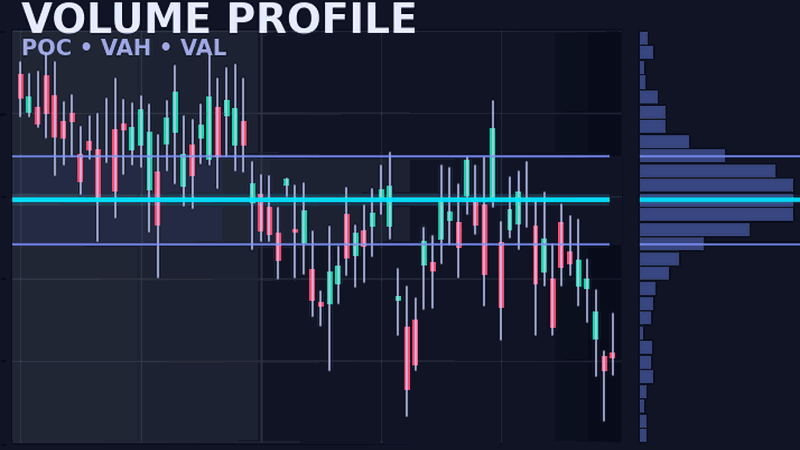
Here's the simple version: Volume Profile shows you where the volume happened, not just how much volume there was.
Traditional volume indicators sit at the bottom of your chart and tell you "hey, lots of trading happened today." Useful? Barely.
Volume Profile flips it sideways. It shows you the volume at each price level. Now you can see exactly where traders were fighting, where they agreed on value, and where price just blew through because nobody cared.
That's actionable information.
The Three Things That Actually Matter
Let me cut through the jargon. There are three concepts you need to know:
1. VPOC (Volume Point of Control)
This is the price level where the most volume traded. Think of it as the "fair value" price where buyers and sellers agreed the most.
Why VPOC Matters
VPOC acts like a magnet. Price tends to get pulled back to it. When price moves far away from VPOC, that's often unsustainable—like stretching a rubber band.
2. Value Area (VA)
This is the range where 70% of the volume traded. It has two boundaries:
- VAH (Value Area High) — top of the zone
- VAL (Value Area Low) — bottom of the zone
Why it matters: Price inside the Value Area = fair. Price outside = unfair (and often temporary).
3. High Volume Nodes (HVN) vs. Low Volume Nodes (LVN)
- HVN = price levels with lots of volume. These act as support/resistance because traders accepted these prices.
- LVN = price levels with little volume. Price tends to move fast through these because there's nothing holding it there.
The Speed Rule
When price hits an LVN, expect speed. When it hits an HVN, expect a fight.
How I Actually Use This on NQ
Here's where it gets practical.
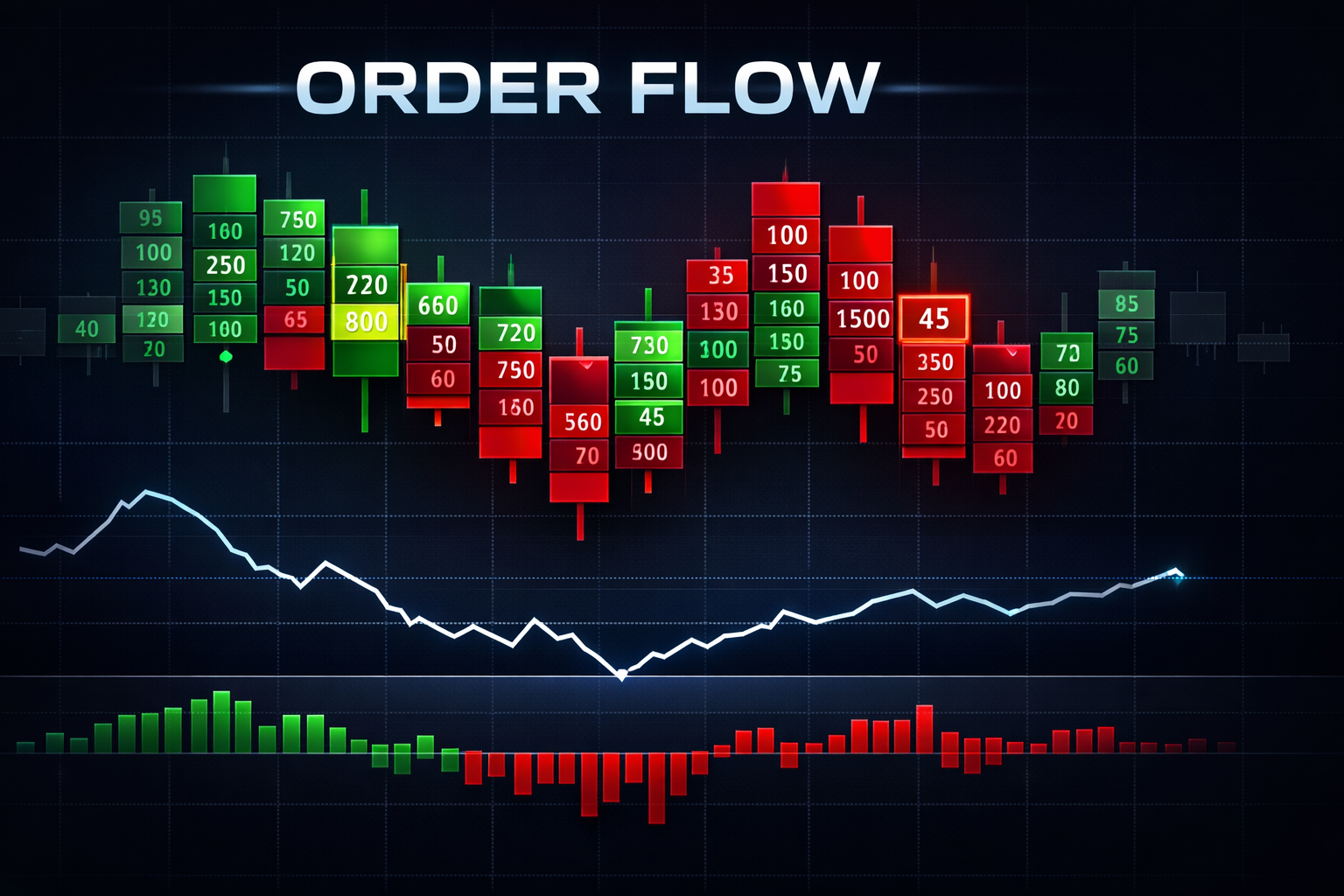
Setup: I use daily and weekly Volume Profiles. NinjaTrader has built-in Order Flow + Volume Profile that works well. You don't need expensive third-party stuff to start.
Trade Idea #1: VPOC as a Magnet
If NQ opens significantly above or below the previous day's VPOC, I'm watching for a pullback to that level. Not blindly trading it—but it's on my radar as a high-probability target.
Trade Idea #2: Value Area Breakout
When price breaks out of the Value Area and holds outside it, that's often the start of a real move. The key word is "holds." A quick poke outside that fails? That's just noise.
Trade Idea #3: LVN Speed Zones
Identify the Low Volume Nodes on your profile. When price approaches these, be ready for acceleration. These are not the levels to fight—they're the levels where price slides through like a knife through butter.
Ready for Volume Profile?
Get professional Volume Profile indicators with VPOC, Value Area, and HVN/LVN visualization for NinjaTrader 8.
The Part Nobody Tells You
Volume Profile isn't magic. I've seen traders slap it on their chart and expect it to print money. It doesn't work that way.
Here's what actually matters:
- Context is everything. A VPOC from a slow, choppy day is different from a VPOC from a trending day. Learn to read the shape of the profile, not just the levels.
- Time matters. Are you looking at yesterday's profile? Last week's? The developing session? Each gives you different information.
- It's a filter, not a signal. I use Volume Profile to tell me where to look for trades, not when to take them. You still need a trigger.
- Test it yourself. Don't take my word for any of this. Pull up the data. Look at how price reacted to historical VPOCs on NQ. Build your own conviction.
Getting Started
If you're on NinjaTrader, you already have access to Volume Profile in the Order Flow+ add-on. Start with the session profile—it shows you the developing Volume Profile for the current trading day.
Watch it for a week. Don't trade it. Just observe:
- Where does VPOC form?
- What happens when price leaves the Value Area?
- How does price behave at LVNs?
Then, once you have some observations, start testing ideas. Backtest them. Forward test them. Only then do you put money on the line.
That's how you actually learn this stuff. Not from some course. From doing the work.
Summary: VPOC Essentials for NQ
- VPOC is where the most volume traded — it acts as a price magnet
- Value Area (70% of volume) defines fair value — breakouts that hold are real
- HVN = price fights here (support/resistance) | LVN = price accelerates through
- Use Volume Profile as a filter to find levels, not a signal to trade blindly
- Observe for a week, backtest your ideas, then trade with conviction